Montgomery's vision for local papers
|
|
Local World on SubScribe
Why local newspapers have to change
and The Full Monty: how the plans are being put into practice - and what some of the journalists think Going back
|
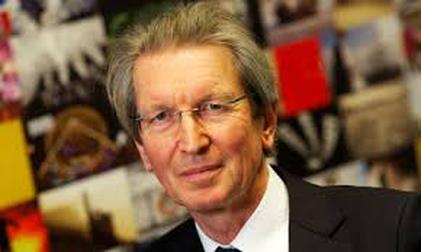

What he said.... ...and what it means
Role of the Journalist in the Transformed Local World
|
Apart from the elite and usually elitist newspaper writers the role of the journalist remains entrenched in the industrial age as a medium grade craft. Usually it is a role involving a single skill organised in hierarchies invented to ease production and work flows when typewriters, fixed line phones and pencil wielding sub-editors all inhabited long benches shrouded in cigarette smoke.
The school leaver culture of learning a trade dominated or media school graduates poured into newspapers with unquestioning academic thinking that perpetuated this industrial past. The Local World model will migrate journalists a million miles from this tradition and because it has festered for so long the change needs to be swift and all embracing. It will be propelled by the technology that drives every other transactional business. Local World will develop a truly elite professional body of journalists each with managerial skills frequently exercised with full autonomy. Underpinning our model is the need to comprehensively serve every one of communities with content that is rich and comprehensive so there is no other place than the local publisher that our audience and readers need to find. Clearly that objective can not be fulfilled by the single story, single task practices that are still mostly at work within our and everyone else’s newspapers. Nor can the much vaunted and much misunderstood UGC sufficiently augment our offering with the right sort of content. The role and the scope of the journalist needs to be redefined, as does the structure for content collection and dissemination, and the recruitment and training of future journalists should be reassessed. An initial framework for the latter is contained at the end of this essay. |
|
Apart from grand columnists writing for posh folk, journalism is a craft on a par with bricklaying. It’s stuck in a mould of everyone doing a specific job and newcomers have been indoctrinated.
This way of working has festered for so long that we need a swift wholesale revolution. Technology will rule. Local World journalists will have to do everything, often with no guidance from above. We want to offer such rich and comprehensive coverage that no one needs to look anywhere else. We can’t do that with the existing structure and just getting the readers to contribute won’t give us enough of the right stories. So we’re going to change the journalist’s job description, approach to news gathering and the way we publish stories. We will also change the way we recruit and train journalists. |
Skills and tasks of the senior journalist
|
After training the journalist will assume control of a segment or segments of content. He will singly be responsible for sourcing this content, collecting it and publishing it across all platforms.
The majority of this content will be produced by third party contributors and some examples are given below. The senior journalist will negotiate with the providers of the content and organise its collection usually by self-serve by the provider. The journalist will have the task of providing attractive formats for this third party content in the first instance online and for constantly monitoring the content to instigate its promotion to a position of prominence on any platform or in some cases eliminating it. The tradition of journalist shifts will be abandoned. The specialist segment journalist - and there will be no other category of journalist excepting content managers - will cover his content territory autonomously within the brief of the local publisher and he will work remotely. Clearly neither the content nor its providers are situated in the newspaper office. The journalist will embody all the traditional skills of reporter, sub-editor, editor-in-chief, as well as online agility and basic design ability, acquired partly in training but in the case of on-screen capability this is expected as a basic entry qualification as it is now generally present in most 12-year-olds. The content harvesting process is a mix of interpersonal and managerial skills. Journalists have always prided themselves on their foot in the door ability so this just needs to be updated and matched by organisational ability. For instance take the crime, policing and courts content segment that could be extended to involve traffic, underage drinking, even immigration and other areas of life overseen by legislation. The journalist will write and extend his own brief on this and other segments. The task of harvesting content from the various sources demands he uses his initiative and is highly productive. The first port of call will be as high in the police as he can go in his geographical territory but it is not unreasonable that the local publisher should have access to the chief constable himself for at least an introductory encounter. The purpose is to request that the publisher acts as the main conduit for police information of every type - not for the odd photofit in a dramatic crime but for all humdrum information like crime prevention that the police seek to promote. In return the journalist will offer an attractive platform for this content and a large measure of control presumably by the police information office. As trust is developed the range of content will be extended and provides an exclusive public service and will be a rich source of more traditional stories. The journalist will maintain and develop this relationship. Before anyone asks, this does not make the police or any other institution immune from scrutiny or criticism but the depth and breadth of the relationship with the local publisher will be insulation from the inevitable stresses and strains between the media and the public services. This same model can be applied to all content segments: hospitals and general health and care, education and every school, businesses large and small, sport at all levels, entertainment and culture. This is very different from the traditional perception of UGC, usually associated with individuals who will still have a part to play but usually as professionals inside an institution like a college, a company or a leisure or sports activity. There will be only a single rank for senior journalists. All will have a content segment or segments as their specialisation. Of course in the once in the lifetime event of the jumbo jet down in the High Street then everyone will muck in but it is self-evident that in the most traumatic news story that the specialisation of journalists will be a great resource. This model will give the publisher an unchallengeable local knowledge and create a one-stop shop for content. |
|
Every journalist will be put in charge of a ‘segment’ and will have to deal with other people’s offerings as well as finding their own stories. They must then assess them, write them, sub them and publish them on mobile, web, tablet, newspaper, Twitter, Google and anything else we can think of.
Most stories will come from unpaid stringers and various local vested interests who will put their copy directly into the system. The journalist will then have to make it look pretty, turn it into English and placate the contributors if they don’t like the result. Once the story is up online, the journalist can see whether it’s any good and turn it into a page lead or spike it. Rotas and shifts will be abolished. Each journalist will work from home and be responsible for their ‘segment’ 24/7, 7 days a week. We won’t accept anyone who isn’t tech-savvy – any 12-year-old can do it – every journalist must be a reporter, sub, editor, designer and be able to post stuff online and tweet about it. They must also have foot-in-the-door determination and be able to juggle a thousand tasks at once. For example, the poor sap covering the police, crime and the courts will also have to take on traffic, underage drinking, immigration and other anything else that is covered by any law. They must be highly productive and use their initiative to get stories. The crime hack should start out by offering the chief constable free access to the paper/website for all police propaganda, from photofits to stolen bikes and crime prevention campaigns, promising to make it look good and handing control of most of it to the police press office. Once the cops trust us, they’ll start giving us proper stories that people might like to read. Don’t worry, that won’t stop us criticising the police, but the journalist will be so pally with the cops that they won’t mind. The same system will apply to other ‘segments’ such as health, education, business, sport and culture. The stuff they put up on our system won’t be at all the sort of thing that people usually think of as stringer copy because it will come from professionals on the inside. All journalists will be equal and they will all have a speciality. But if a jet crashes in the High St, then everyone will have to muck in. |
Role and skills of the Content Manager/Director
|
There will be just one executive command layer within the modern content department. In the smaller operations there will only be one Content Manager. For the time being this remains a journalistic role but with audience data increasingly driving content exploitation it could in future mean that the content manager comes from a publishing background without having performed as a line journalist.
The Content Manager is the role traditionally occupied by the editor and his or her lieutenants. The Editor remains a prestige title and worthy of being continued if it describes the Editor-in-chief but that individual should be seen by all the company as being the Director of Content for the franchise across all platforms. And that role, like senior journalists, is far removed from tradition. The Content Director will spend little time selecting page leads and instead be concerned with high level decision making - the content strategy, the distinction of the different platform products, the quality and breadth of the content and setting the general tone and style in tune with the community served. Those areas of taste, legalities, and newspaper style should be absorbed by the rank and file senior journalists as part of their responsibilities rather than being presided over grandly by the man in the glass office. Once the content management systems have been refined or replaced it will be expected that every Content Director and Content Manager has the skills to single handedly assemble all content within a newspaper format which will be highly templated. On the smaller weekly titles a single individual, Content Manager, will skim largely online published content to create the newspaper in a single session or small number of sessions rather than a number of staff following a laborious and time-consuming schedule spanning many days of the week. On daily papers only a handful of Content Managers will be office bound and will orchestrate all products across the platforms. Senior journalists will episodically visit offices with free seating to discuss strategic or quality issues rather than to sit and wait for a story briefing. News and content lists will be compiled by the senior journalists online rather than by the traditional processes of news and features editors and the Content Managers will be guided in their decision making and quality control by these. In this respect the senior journalists will be required to keep up with local, national and international content relating to their segment specialisation. For example the environment segment will be overseen by a senior journalist who knows that a storm is coming rather than being told that by the clunky old newsdesk which anyway will not exist. Nor will the farming segment journalist need to be told by the news editor (a defunct title and function) that Government has ordered a badger cull. The high level functions of Content Managers will be acutely aligned to the commercial operation of the local publisher seeking means to exploit content in platform distinct ways. Again the Content Managers will direct how the various products on the various platforms are differentiated from one another and complement each other. |
|
There will be only one executive layer above the journalist. The titles editor, news editor, chief sub will all disappear to replaced by content managers, who will have equal ranking. In small operations there may be only one – and they may not have an editorial background.
Well, actually there may be another layer. Instead of having an editor-in-chief, we will have a director of content, who won’t do any journalism but sit and have grand thoughts about strategy and how to give papers and websites built by template a distinctive feel. The man in the glass office won’t have time to worry about things like style, taste, legalities. That should all be the responsibility of the rank-and-file journalists. The content director and managers should, however, be able to put a printed newspaper together single-handedly. On smaller weeklies, the content manager should be able to regurgitate stuff that’s up online in a couple of hours. On dailies, a handful of content managers will work in the office overseeing the paper, website etc. There will be no news conferences, although journalists may pop into the office from time to time to brief the content manager or discuss stories. The newsdesk and news editors will be abolished. Specialists shouldn’t need them to tell them what’s going on in their patch locally, nationally or internationally. Content managers will have to work closely with the publisher to make sure we make the most money possible from the stories we publish. |
Recruitment and Training of journalists
|
The following is an outline proposal that needs to be further refined and debated. However the objective is to professionalise the Content Department of all of our franchise centres.
At the same time we need to maintain flexibility to admit recruits of exceptional creativity or with exceptional relevant experience and from unusual backgrounds. A loose graduate only recruitment programme is suggested and certainly not necessarily from media studies departments. The key attributes are a high degree of literacy, inquisitive and presentational skills, strong but not necessarily confident personality and a broad general knowledge manifested in part through educational attainment. It might be regarded that these are some of the accepted traditional requirements but the critical difference is that candidates should have a combination of the skills of multi-platform communication and organisational and management ability. Enabled with a broad and deep general knowledge, particularly in current affairs, this will allow the recruit to fly solo at an early stage. The old-fashioned publishing structure that acted as a hydra-headed nanny will no longer exist. Training should be predicated with short print and online writing techniques courses but with no attempt to standardise reporting as has been the practice for decades. Instead there will be a tolerance to individual styles and an emphasis on comprehension in line with the culture where people are communicating successfully with each other on their personal devices minute by minute. Then recruits should understudy a number of content segment senior journalists as well as becoming familiar with the content and commercial direction by following the executives in these areas. All recruits would immediately develop a live content stream based on their own personal experience or activities provided it is relevant to the local community and then expand their role gradually working up to senior journalist status. Finally none of this role definition defies the traditional practices of journalists. Each must be able to cover any unfolding situation or production task but these skills are a very small part of the expanded role of the new operating model journalist. |
|
We will hire only highly literate graduates of exceptional creativity.
They must be inquisitive and have strong personalities and presentational skills. They will need management ability and a deep and broad general knowledge so that they can be sent off to work on their own without any backup as soon as possible. The newsroom of experienced hacks who traditionally guide a rookie through their early months - the 'hydra-headed nanny' - won't be there. They won’t be taught how to write news stories; if they can text their friends all the time and be understood, they should be able to communicate. Trainees will shadow senior journalists covering different ‘segments’, but they must start blogging on their first day. Finally, all of this is on top of all the traditional journalistic practices. Everyone must be able to deal with anything we throw at them. Oh dear, shame on me. It took three hours to read Monty's magnum opus, translate and post it here, complete with researching a picture and setting up hyperlinks. He expects his staff to be able to put together an entire weekly paper in that time. Best I don't apply for a job.
But I do wonder how long it took him to write the original. |